
The integration of Artificial Intelligence (AI) with Network Attached Storage (NAS) and Storage Area Network (SAN) devices represents a transformative convergence in data management, analytics, and infrastructure optimization that is reshaping the architecture of enterprise storage ecosystems.
Traditionally, NAS and SAN systems were designed to provide scalable, high-performance, centralized storage for data retrieval, backup, and sharing across distributed computing environments. However, as data volumes exponentially increase and workloads diversify—driven by the Internet of Things (IoT), cloud-native applications, and real-time analytics—the role of AI has expanded from supplementary automation to core operational intelligence.
Intelligent Data Management


AI-integrated NAS solutions now employ machine learning (ML) algorithms for intelligent caching, predictive maintenance, anomaly detection, and automated tiering of data based on access patterns and business value. By applying deep learning analytics, NAS controllers can autonomously identify frequently accessed ("hot") data and relocate it to faster SSD tiers while moving infrequently used ("cold") data to cost-efficient object storage systems.
This improves throughput, reduces latency, and enhances storage efficiency while lowering total cost of ownership. AI-driven storage orchestration platforms also optimize deduplication and compression ratios by dynamically learning data redundancy behavior across workloads, yielding greater storage density without manual configuration.
SAN Performance Optimization
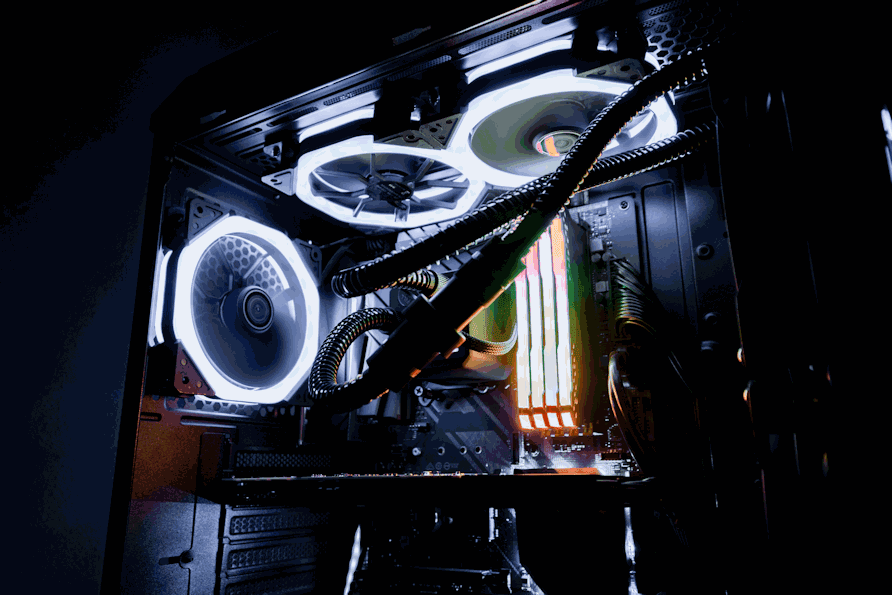
In SAN environments, AI facilitates advanced performance tuning through continuous telemetry analysis, identifying bottlenecks caused by queue depth imbalances, port contention, or irregular IOPS distribution across Fibre Channel fabrics. Using reinforcement learning models, SAN controllers can autonomously reallocate bandwidth, rebalance workloads across zones, and predict capacity saturation before service degradation occurs.
Predictive failure analytics—leveraging large-scale datasets on drive health metrics such as SMART attributes, vibration signatures, and temperature fluctuations—enable preemptive replacement of components before they fail, thus minimizing downtime and data loss. AI's role extends into self-healing architectures, where machine learning systems initiate corrective actions like load redistribution or automatic snapshot restoration without human intervention.
Hybrid and Multi-Cloud Evolution


From a broader technology outlook, the future of network area storage is evolving toward autonomous, software-defined, and AI-augmented architectures that integrate seamlessly with hybrid and multi-cloud ecosystems. Software-Defined Storage (SDS) frameworks abstract the underlying hardware into a programmable layer that can be dynamically optimized using AI-driven policy engines.
These engines analyze workload telemetry in real time—CPU utilization, latency variance, and throughput curves—and adjust resource allocation based on predictive analytics. In hyperscale environments, AI models leverage reinforcement learning to manage distributed data replication, ensuring consistency and fault tolerance across geographically dispersed clusters.
AI-Enhanced Security
Security is another frontier where AI enhances network area storage. Modern storage systems face threats ranging from ransomware encryption to insider misuse, requiring adaptive defenses. AI-driven anomaly detection algorithms continuously monitor access logs, data transfer rates, and file modification patterns to identify suspicious behavior indicative of malicious activity.
For example, sudden spikes in write operations or mass file renaming may trigger automated containment responses such as write-lock enforcement or volume isolation. When integrated with Security Information and Event Management (SIEM) platforms, AI-powered NAS systems can feed real-time telemetry into enterprise-wide threat intelligence frameworks, improving visibility and coordinated incident response.
Edge Intelligence and 5G Infrastructure
As enterprises move toward 5G-enabled and edge-intelligent infrastructure, the combination of AI and network area storage underpins the data layer for decentralized processing. Edge NAS nodes equipped with embedded neural accelerators can perform localized inference for applications like predictive maintenance in manufacturing or patient monitoring in healthcare, reducing bandwidth costs and ensuring data privacy.
Simultaneously, AI enhances Quality of Service (QoS) by dynamically prioritizing traffic and optimizing network storage throughput for latency-sensitive workloads such as video surveillance, virtual desktop infrastructure (VDI), and cloud-native containerized applications. The emergence of NVMe-over-Fabrics (NVMe-oF) technology amplifies AI's ability to manage ultra-low-latency connections between compute and storage nodes.
Market Segmentation and Future Outlook
The market segmentation for Network Area Storage devices in the era of AI integration reflects a multi-tiered landscape categorized by deployment models, organization size, industry verticals, and geographic regions. From a deployment standpoint, on-premises NAS systems dominate sectors with stringent data sovereignty regulations such as government and healthcare, while hybrid and cloud-based NAS architectures are gaining traction among enterprises seeking scalability and disaster recovery.
Market forecasts suggest that AI-integrated network storage will experience a compound annual growth rate (CAGR) exceeding 20% over the next decade, driven by exponential data generation, rising adoption of AI-enabled analytics, and the proliferation of edge computing. Vendors such as NetApp, Dell EMC, QNAP, Synology, and Western Digital are already incorporating AI frameworks into their product portfolios.
Conclusion
The convergence of AI and network area storage marks a paradigm shift toward autonomous, self-optimizing, and context-aware storage infrastructures. AI not only enhances performance and resilience but also transforms storage from a passive data repository into an intelligent data management and decision-support system.
The market trajectory points to a future where NAS and SAN systems serve as the neural backbone of digital enterprises—driving efficiency, agility, and innovation across every data-intensive industry. As AI continues to mature, the synergy between intelligent algorithms, scalable storage architectures, and predictive analytics will redefine how organizations store, secure, and extract value from their most critical digital assets.

Mark Darland
AWS Solutions Architect with 23+ years of experience in cloud automation, cybersecurity, and enterprise infrastructure